
Technical Meeting

Technical-Meeting-Graphic

Purpose

The Technical Meeting enables us to understand your R&D activities, so we can write the best possible technical narrative to support your claim.

What we’ll gather

  • A list of projects you worked on during the claim period.
  • Projects can have started before the claim period, but only R&D expenditure within the claim period can be included.
  • We only need technical information at this stage (for more information on the financial side, contact your assigned Senior Data Analyst whose details can be found in your welcome email).
  • The length of our meeting will depend upon the number and complexity of your projects – but 60 minutes would be typical.

During the Meeting

During the meeting:

  • We’ll identify several individual projects to be written up.
  • For each project, we will drill down into the discussion topics mapped out below.
  • You don’t need to prepare answers or notes in advance, as long as you – or one of your team – are able to talk around and about the topics.

Discussion Topics

A short, descriptive title – We can advise on this during our meeting.

Start date: When (month/year) did the R&D work begin?

End date: Has the work been completed? If So When?

Employees

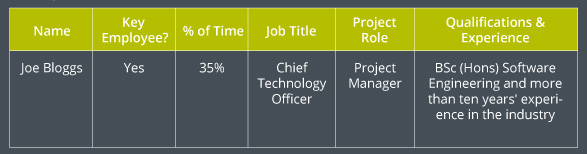
List all employees who contributed to the R&D and briefly outline the following:

  • 1-3 key employees
  • Percentage of time spent on the project
  • Job title
  • Project role
  • Qualifications & Experience

Employee Example

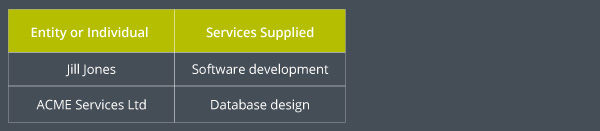
Contractor(s)

Briefly outline details of each contractor who contributed to the project:

Project Contractor Example
Project Contractor

Why did you undertake the R&D?

  • To solve a problem that you (or a client/customer) were experiencing?
  • To capitalise on an opportunity?

What was the vision for the future?

  • What would be created?
  • Who would benefit, what would it offer – and how?
  1. Were there any solutions already in existence, that could solve your problem, or that could be adapted to solve your problem?
  2. Were you extending or building upon an existing product or solution – or creating something entirely new?

This section is very important. It is the key to demonstrating that your work should be considered as R&D rather than business-as-usual development.

  • What were the technical challenges that you had to overcome in order to achieve your vision?
  • You may not have succeeded in overcoming all of these challenges – failures should be documented, as well as successes.
  • What technical options were considered (design options, materials, tools)?
  • What technical solutions were chosen – and why?
  • Were all of the intended challenges/advances achieved?
  • What problems did you encounter along the way, and how did you address them?
  • What was the status of the work at the end of the qualifying period?

After the Meeting

  • After the meeting you will receive a draft of the report for approval.
  • Your approval is needed before your claim can be progressed to the next stage.

© Copyright - Amplifi Solutions Ltd | Registered Address: 10 Mill Road, Ballyclare, BT39 9DY | Company Number: NI623767 (Registered in Northern Ireland)