Capital Allowances Ireland
Up to 35% of your property’s cost could qualify for tax relief.
Chartered Quantity Surveyors • No Upfront Fee • 100% Revenue Compliance Record

Your accountant works from your accounts which do not break these costs down. Identifying them takes a physical inspection by a qualified surveyor, adding a specialist layer to your accountant’s work.
Our chartered quantity surveyors focus on Wear and Tear Allowances (WTA) and Industrial Buildings Allowance (IBA). We inspect the building, apportion qualifying costs item by item and provide a detailed valuation report to your accountant for your Corporation Tax return, with support through to any Revenue queries.
Wear and Tear Allowances apply to qualifying plant and machinery; the systems and features built into the fabric of your commercial property that make it function, not just the structure itself.
Claims are written off on a straight-line basis at 12.5% per annum over eight years and can typically deliver between 15% and 35% of the property’s purchase price in tax deductions, depending on building type and specification.
Without specialist quantity surveying input, these embedded assets can go unidentified and unclaimed.
To Claim:
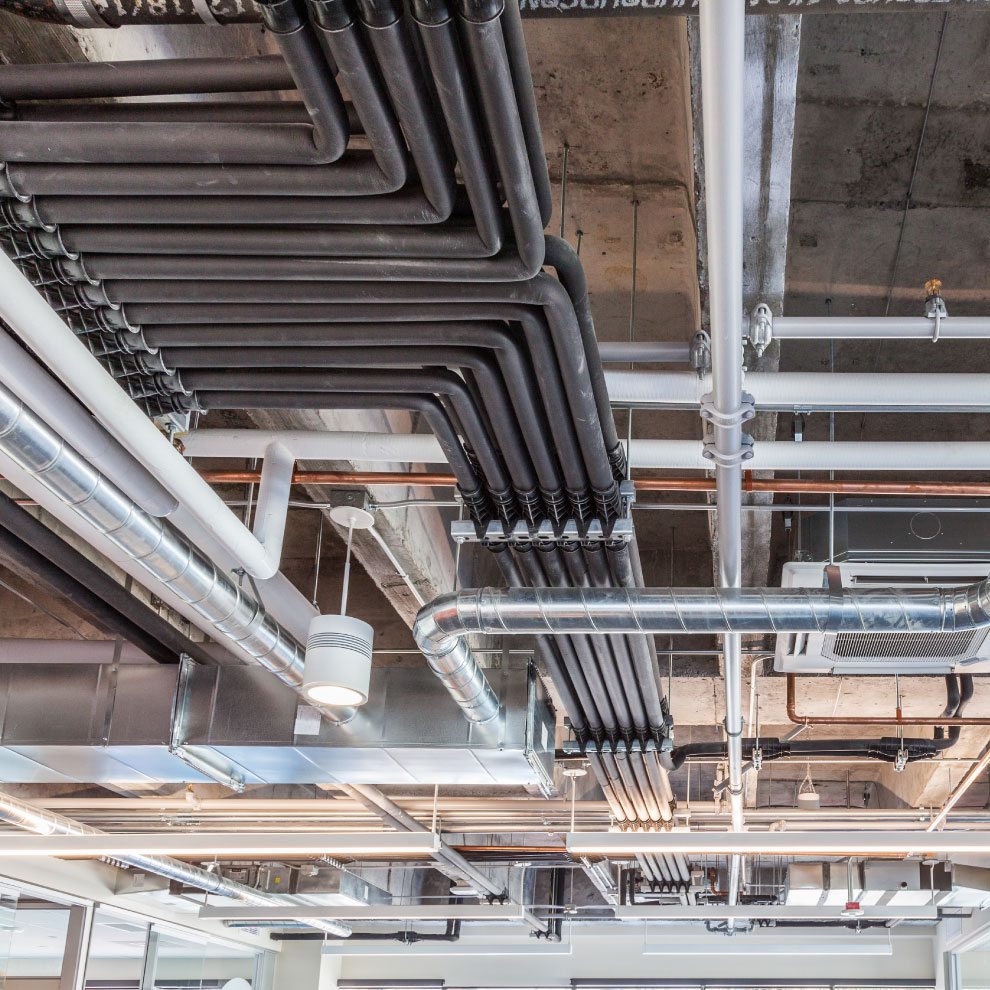
Mechanical and Electrical Systems
Building Infrastructure
Specialist Fit-Out

The Industrial Buildings Allowance provides tax relief on capital expenditure incurred to construct, renovate or convert a qualifying industrial property. Qualifying structures are written off on a straight-line basis at 4% per annum over 25 years.
Identifying the maximum qualifying expenditure requires professional quantity surveying cost apportionment to isolate non-qualifying elements from your true capital deductions.
To claim:
Relevant Interest: you must hold the specific freehold or leasehold title matching when construction costs were originally paid.
Qualifying Industrial Use: the property must actively operate as an eligible industrial structure (e.g. factory, mill, registered hotel).
In Use at Year-End: you must be actively trading from the building on the final day of your accounting period.
Capital Restriction: allowances apply strictly to capital construction or refurbishment.
Structural Construction and Extensions
Sub-structure excavation, groundwork, structural steel frameworks, external brickwork, concrete floor slabs and structural building extensions.
Capital Refurbishment and Conversions
Capital layout alterations, permanent interior walls and structural works to convert non-industrial premises into qualifying industrial use (excluding routine repair and decoration maintenance).
Site Preparation and Integral Infrastructure
Land clearing, professional levelling, specialised structural piling and essential drainage lines integral to the building foundation.
Design and Project Overhead Fees
Proportionate project overheads including architectural design, structural engineering, project management and main contractor preliminaries (excluding planning permission and legal acquisition fees).
In Ireland, capital allowances claims combine specialist valuation with accountancy expertise.
Our commercial property capital allowance service partners with accounting firms, giving their practice the specialist surveyor expertise without the need to build it in-house.
| Accountant | Chartered Quantity Surveyor (QS) | |
|---|---|---|
| Role | Works from your financial records (invoices, contracts and accounts) alongside our valuation report to identify what property expenditure qualifies, and then claims it on Form CT1 or Form 11. | Conducts a physical inspection and professional cost apportionment of your property, identifying and valuing the embedded plant and machinery that Revenue allows under Wear and Tear and IBA rules. Delivers a Revenue-ready report directly to your accountant. |
| Wear and Tear Allowance | Assets already broken out in your financial records, for example:
● Separately invoiced equipment If it is not in the records, it cannot be claimed. | Qualifying plant built into your building’s fabric – systems that were installed as part of construction or fit-out and have never appeared as a separate line item on an invoice or the fixed asset register, for example:
● Electrical distribution These are invisible in the accounts but qualify fully under Revenue’s Wear and Tear rules. |
| Industrial Buildings Allowance | Files IBA on the construction or purchase cost recorded in your accounts, using the original build contract or contractor’s certificate. Correct identification of the relevant interest – and the date construction costs were originally incurred – is essential to the claim. | A QS establishes the base cost by:
● Removing all qualifying plant and machinery from the total build cost before the IBA base is established. Claiming IBA on the full build cost without first removing qualifying plant and machinery will result in an overclaim – professional cost apportionment is essential to get this right. |
| What is typically assessed | Limited to what is already visible in the financial records. For most Irish commercial properties, that leaves significant allowances unidentified. | Between 15% and 35% of total property cost identified as qualifying Wear and Tear expenditure. On a €1m property, that is up to €350,000 in allowances, the majority of which would never surface without a physical survey and professional cost apportionment. |
Who can claim Wear and Tear Allowances and Industrial Buildings Allowance?
Owner-occupiers, investors, landlords and lessees can all potentially claim.
The test is whether you have incurred capital expenditure on qualifying assets used for the purposes of a trade or rental business. For leased plant and machinery the entitlement turns on who bears the burden of wear and tear, which depends on the lease terms.
I have already bought or refurbished the property - have I missed my chance to claim?
Not necessarily. There is no requirement to raise a capital allowances claim at the time of purchase or completion. Provided you are within Revenue’s four-year amendment window for the relevant accounting periods, a specialist review can still identify qualifying expenditure and recover allowances through an amended return. Many of our most valuable claims are for properties acquired or refurbished years ago where no specialist survey was ever carried out.
Can I claim if I lease the property rather than own it?
Yes, in some circumstances. If you have incurred capital expenditure on qualifying plant and machinery under a lease – for example, fitting out a premises you occupy as a tenant – you may be entitled to claim Wear and Tear Allowances on that expenditure, provided the assets are used wholly and exclusively for your trade. The key test is who bears the economic cost of the assets, not simply who holds the title.
My accountant already handles my tax return - is there anything left to claim?
Your accountant will claim allowances on the obvious items (computers, vehicles, loose furniture) where the cost is on an invoice. The bigger claims are usually on plant and machinery embedded in property, where no invoice itemises what qualifies and what does not. Identifying those costs accurately requires a mix of tax, surveying and construction expertise that sits outside a typical accountancy practice. We work alongside your accountant rather than replacing them.
How much can I claim?
It depends on the property type and the nature of the capital expenditure. For Wear and Tear Allowances, a specialist survey typically identifies between 15% and 35% of the property’s total cost as qualifying. Industrial Buildings Allowance covers structural expenditure at 4% per annum over 25 years. On a €1m commercial fit-out, it is not unusual for a comprehensive claim to generate €150,000–€350,000 in qualifying allowances, translating to a six-figure reduction in your tax liability over the claim period. We provide a free preliminary desktop review to give you a realistic estimate before any commitment.
How far back can I claim allowances I missed in earlier years?
You can generally amend tax returns going back four years to include allowances that were missed, subject to the facts of each case. This is often where the most significant catch-up claims arise – particularly for property where embedded plant and machinery was never identified at the time of purchase or fit-out.
Can I still benefit if my business is making a loss or pays little tax?
Yes. Wear and Tear Allowances and Industrial Buildings Allowances can be carried forward indefinitely against future profits of the same trade. They do not expire, and there is no time pressure; the value of the claim is preserved until your business returns to profit.
What happens if Revenue audits the claim?
A properly prepared claim is supported by detailed cost schedules, physical site survey evidence and valuations cross-referenced to Revenue’s published guidance and the Taxes Consolidation Act 1997. Should Revenue request further information or open a compliance review, our team provides full support throughout, at no additional charge. Our 100% compliance record over 10+ years reflects the robustness of our methodology.
Can I claim on a property I have since sold or plan to sell?
If you’ve already sold, you may still be able to recover allowances for the periods you owned and traded from the property, provided those years fall within Revenue’s four-year amendment window.
If a sale is pending, it’s worth acting before completion. A review carried out while you still own the building allows unclaimed allowances to be recovered through your current tax returns, and claiming does not increase your CGT exposure on the disposal.